Step-by-Step Guide to Building a Full-Stack Web Application in 2025
A curated list of essential free tools for web developers in 2025, including code editors, testing t...
5 min readVIEW LOG

SYSTEM STATUS: ONLINE
LOCATION: WORLDWIDE
SLUG: how-to-build-a-mern-crud-application-step-by-step-complete-beginner-to-advanced-guide
Learn how to build a full MERN CRUD application using MongoDB, Express.js, React.js, and Node.js. This detailed step-by-step tutorial covers backend API creation, MongoDB data modeling, React UI development, API integration, and deployment. A perfect guide for beginners and full-stack developers looking to master the MERN stack in 2025.
The MERN stack—MongoDB, Express.js, React.js, and Node.js—is one of the most powerful and in-demand web development stacks in 2025. A CRUD application (Create, Read, Update, Delete) represents the core functionality of almost every modern web app. In this article, we will explore how to build a complete MERN CRUD application step by step, covering both backend and frontend development with best SEO and performance practices.
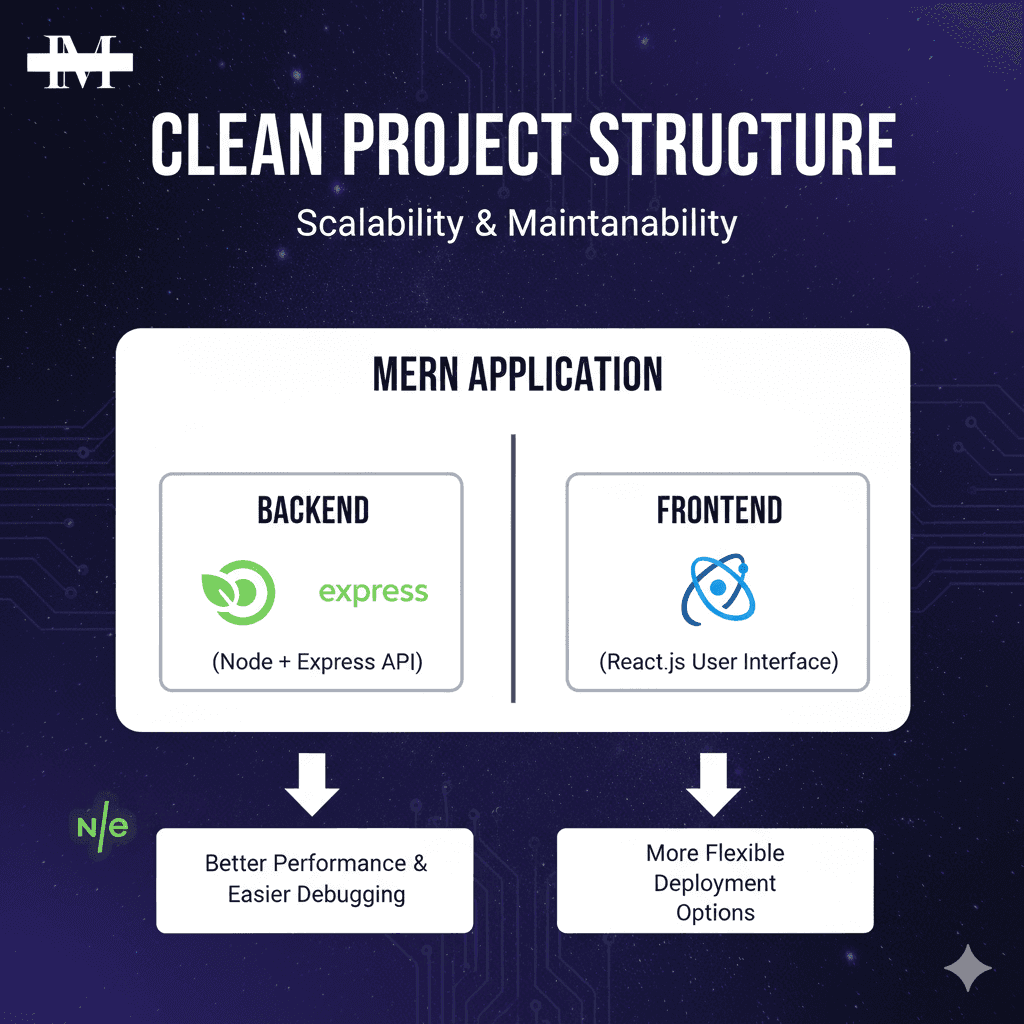
A clean project structure is essential for scalability and maintainability. In this guide, we divide our MERN application into two folders:
Backend (Node + Express API)
Frontend (React.js User Interface) This separation ensures better performance, easier debugging, and more flexible deployment options.
The backend is responsible for handling API routes, connecting to MongoDB, and managing the core logic of your CRUD operations. We install Express, Mongoose, and CORS and configure a basic server. This backend will power all Create, Read, Update, and Delete operations in the app.
We create a simple yet scalable Mongoose model for our CRUD application. MongoDB’s schema-less structure provides great flexibility while Mongoose adds helpful validation and structure to the data.
This step includes building all necessary API routes:
POST: Create new data
GET: Read and fetch data
PUT: Update existing data
DELETE: Remove data These routes act as the communication bridge between your MongoDB database and React frontend.
We build a clean and responsive React interface using functional components and useState. Users can add new entries, update existing records, and delete them—all with real-time updates fetched from the backend API.
Using Axios, we connect the frontend to our backend API. We also configure a proxy for local development to avoid CORS issues. At this stage, the MERN CRUD application becomes fully functional.
The backend can be deployed on platforms like Render, Railway, or Hostinger, while the React frontend can be hosted easily on Vercel or Netlify. Using environment variables ensures security and better SEO performance.
Building a MERN CRUD application is one of the best ways to learn full-stack development. This guide walked you through Node.js, Express API creation, MongoDB modeling, React user interfaces, and deployment. Mastering CRUD operations opens the door to advanced concepts like authentication, dashboards, admin panels, and fully scalable systems.
A curated list of essential free tools for web developers in 2025, including code editors, testing t...
Explore the top JavaScript frameworks in 2025, their features, advantages, and which framework is be...